
Ten to a class
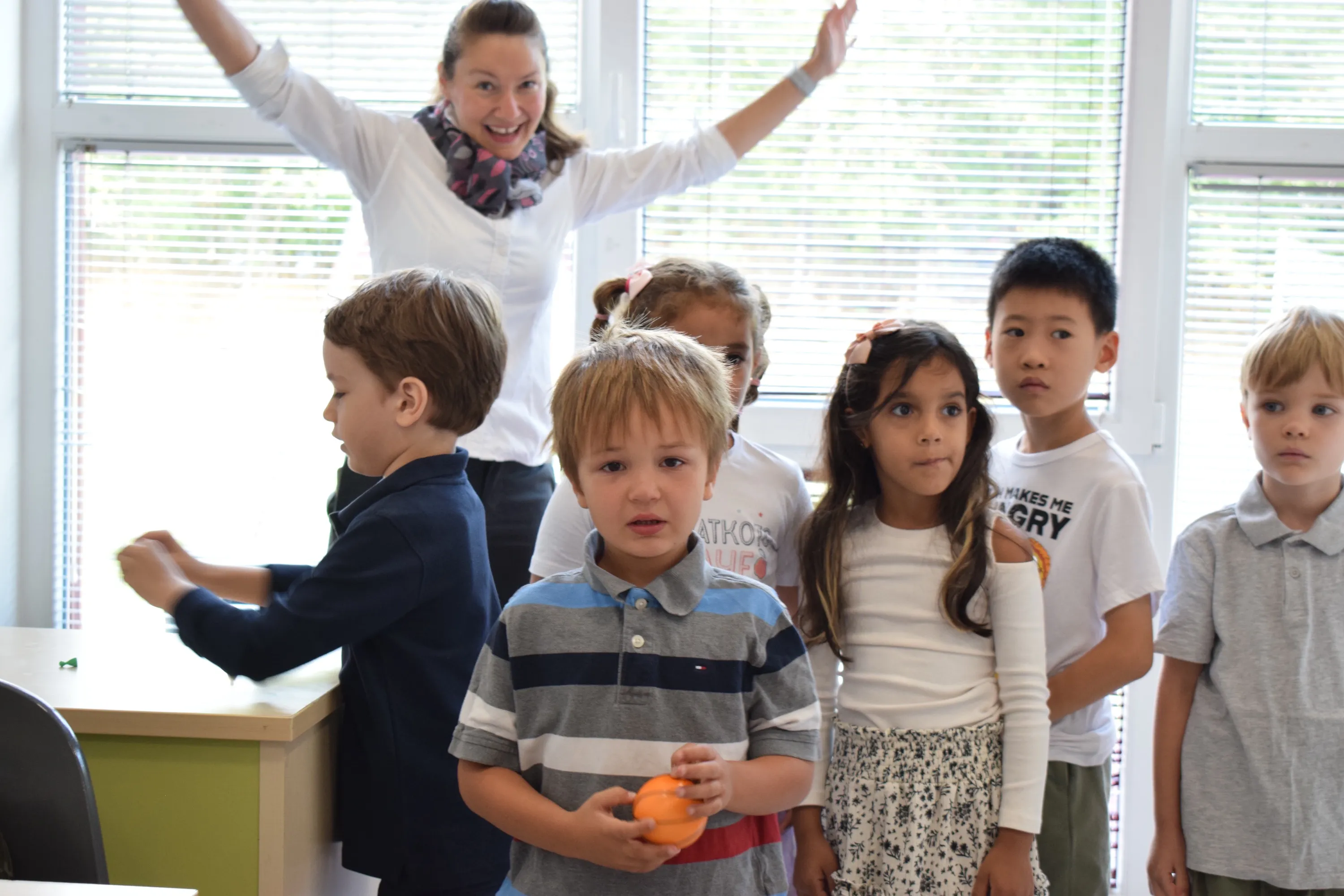
An average of ten students per class — enough for a big game at break, few enough that no one is ever a face in the crowd.
Grade 1 · IB Primary Years Programme Enrolling 2026/27
The story of a year in Grade 1 at International School Maximilian — told the way our first graders told it: on the classroom walls.
The story of a year
On the wall of the Grade 1 classroom, a row of hand-painted bees carries three short sentences: I belong. I become. I bestow. Nobody planned the school year around a mural — but that is exactly the story the walls ended up telling. Three chapters — and it starts, like all good stories, with day one.
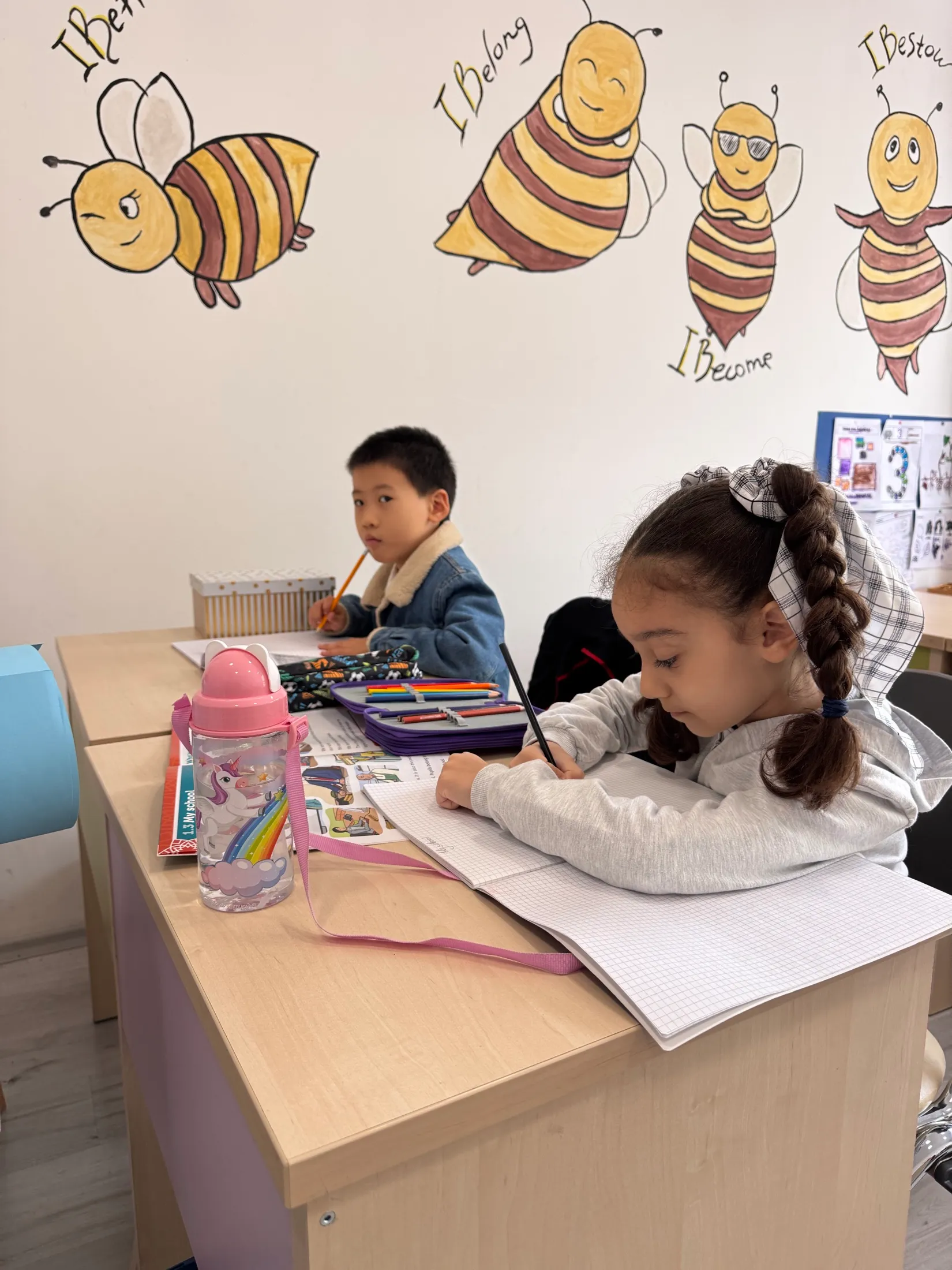
The bees in question, on the classroom wall.
Prologue · The first morning
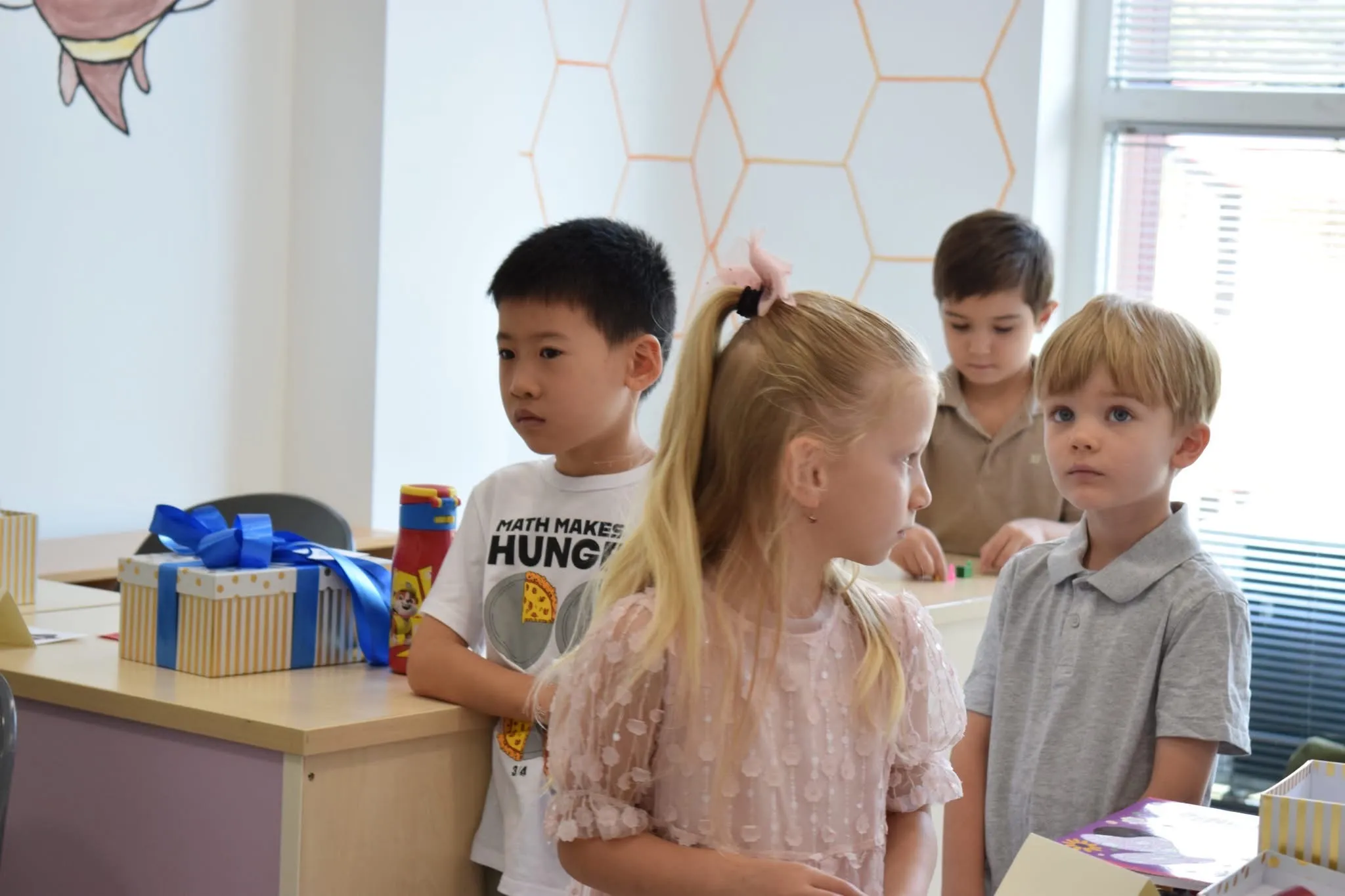
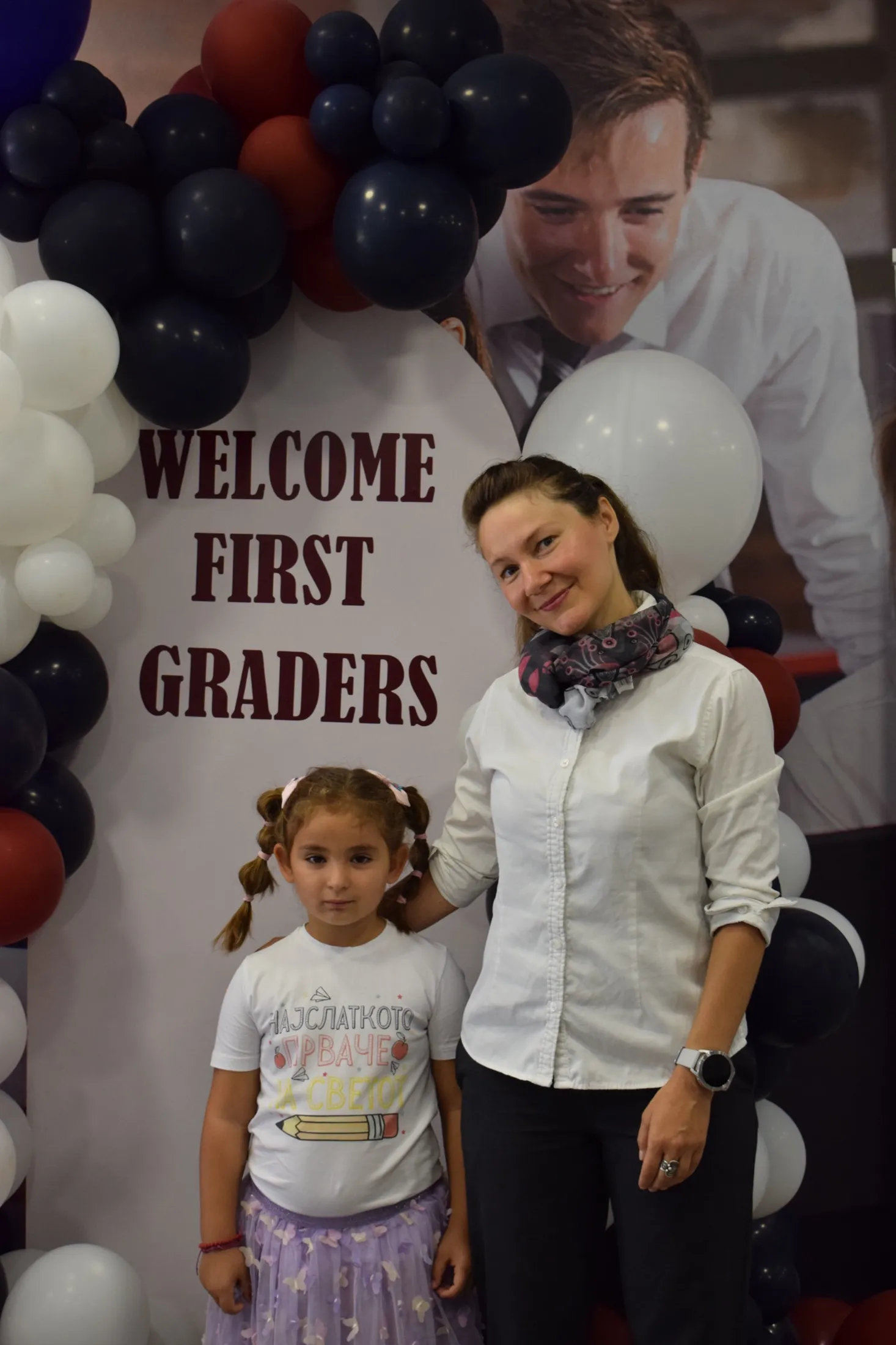
Ten small people walked into Classroom 1 last September carrying brand-new backpacks and every nerve they owned. Waiting inside: wrapped gifts, one for each of them — a welcome, and a promise that school is something to look forward to.
By snack time the nerves were gone and the backpacks had found their hooks. Everything below is what happened next.
Chapter One · Settling In
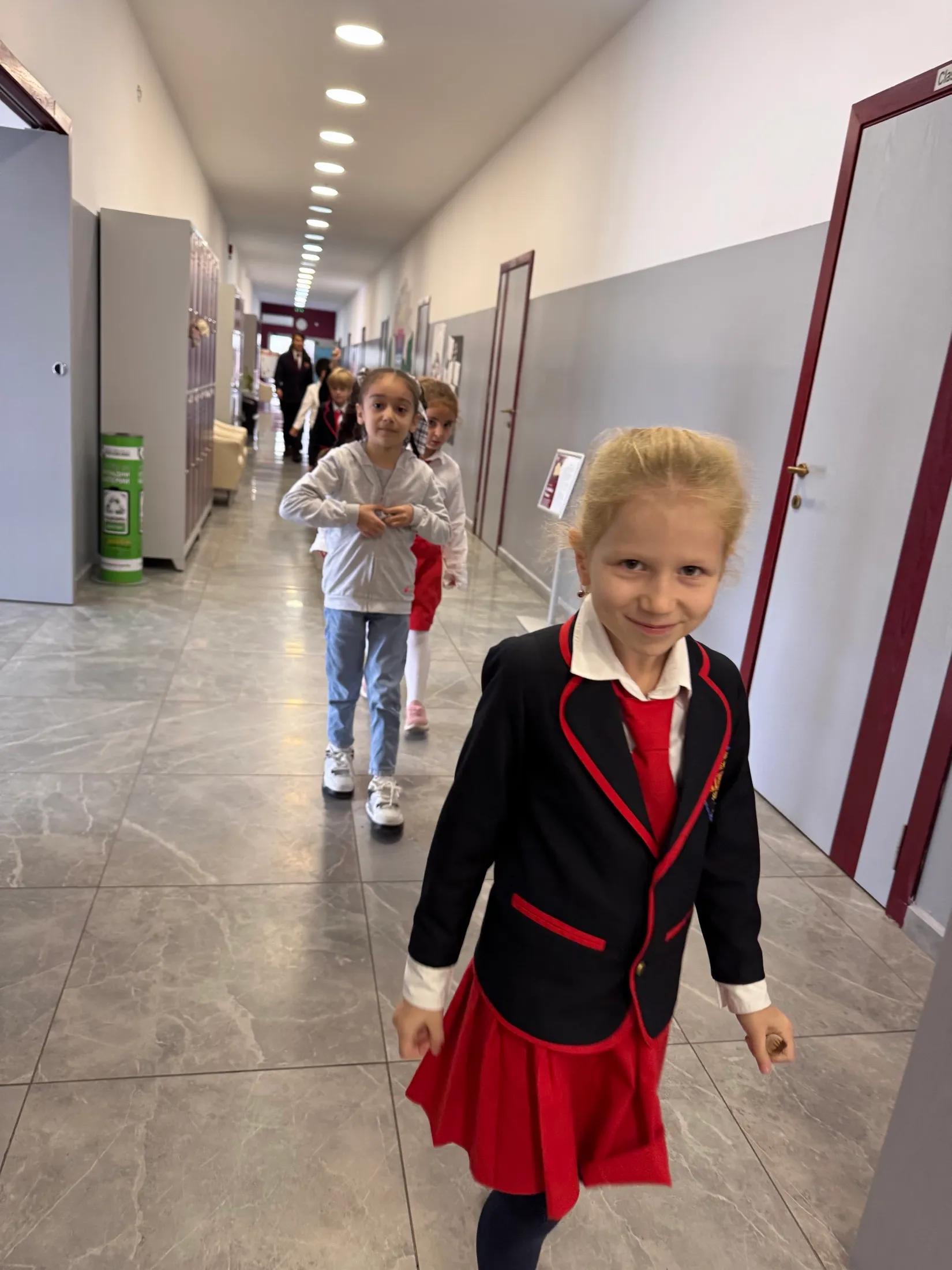
September begins with small coat hooks, a new uniform, and one big question: will I make friends here? The answer comes quickly. With an average of ten children to a class, there is no back row in Grade 1 — every child is greeted by name at the door, and the teacher who leads the morning walk down the hallway is the same one who knows which desk wobbles and whose tooth is about to fall out.
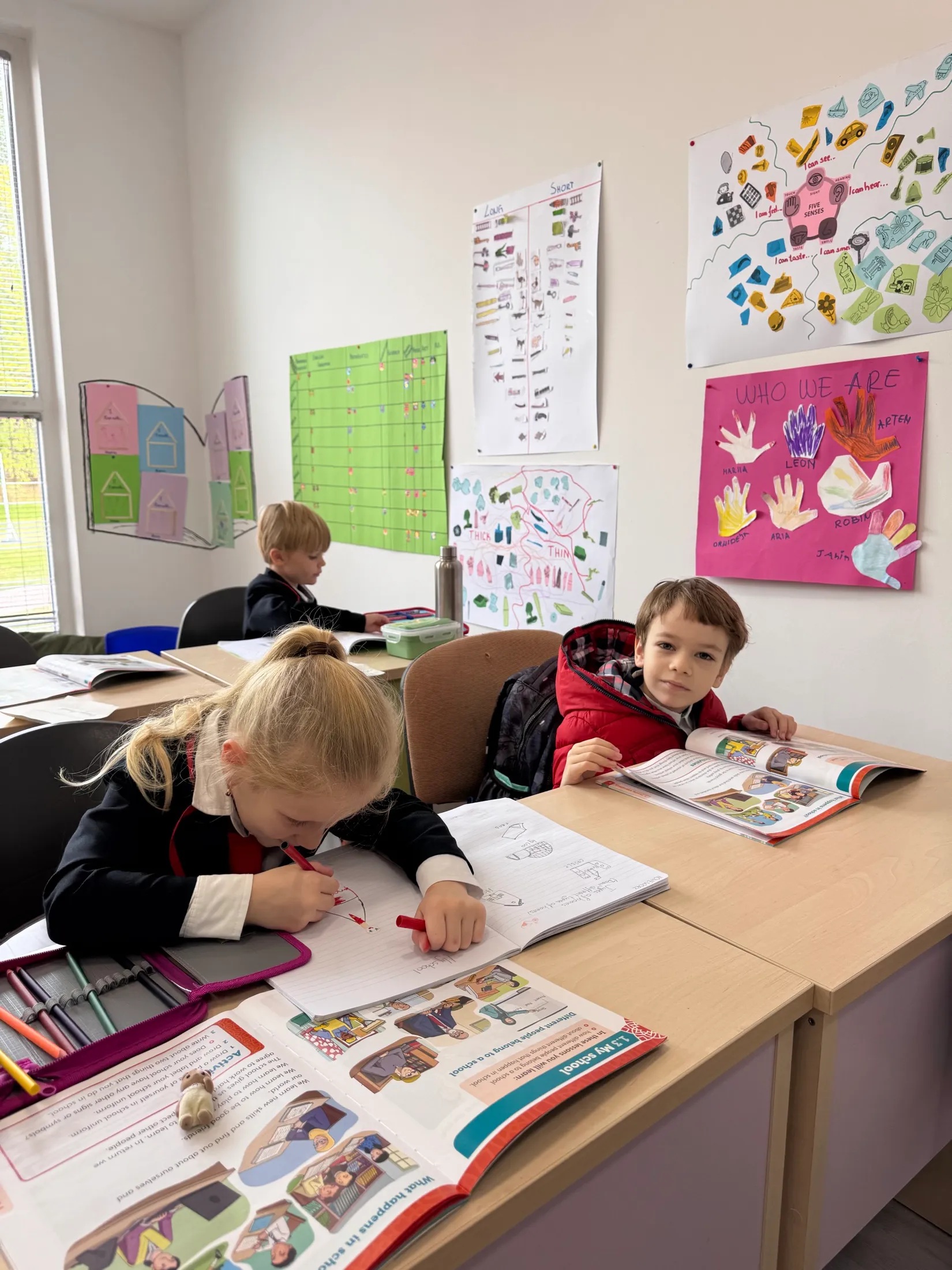
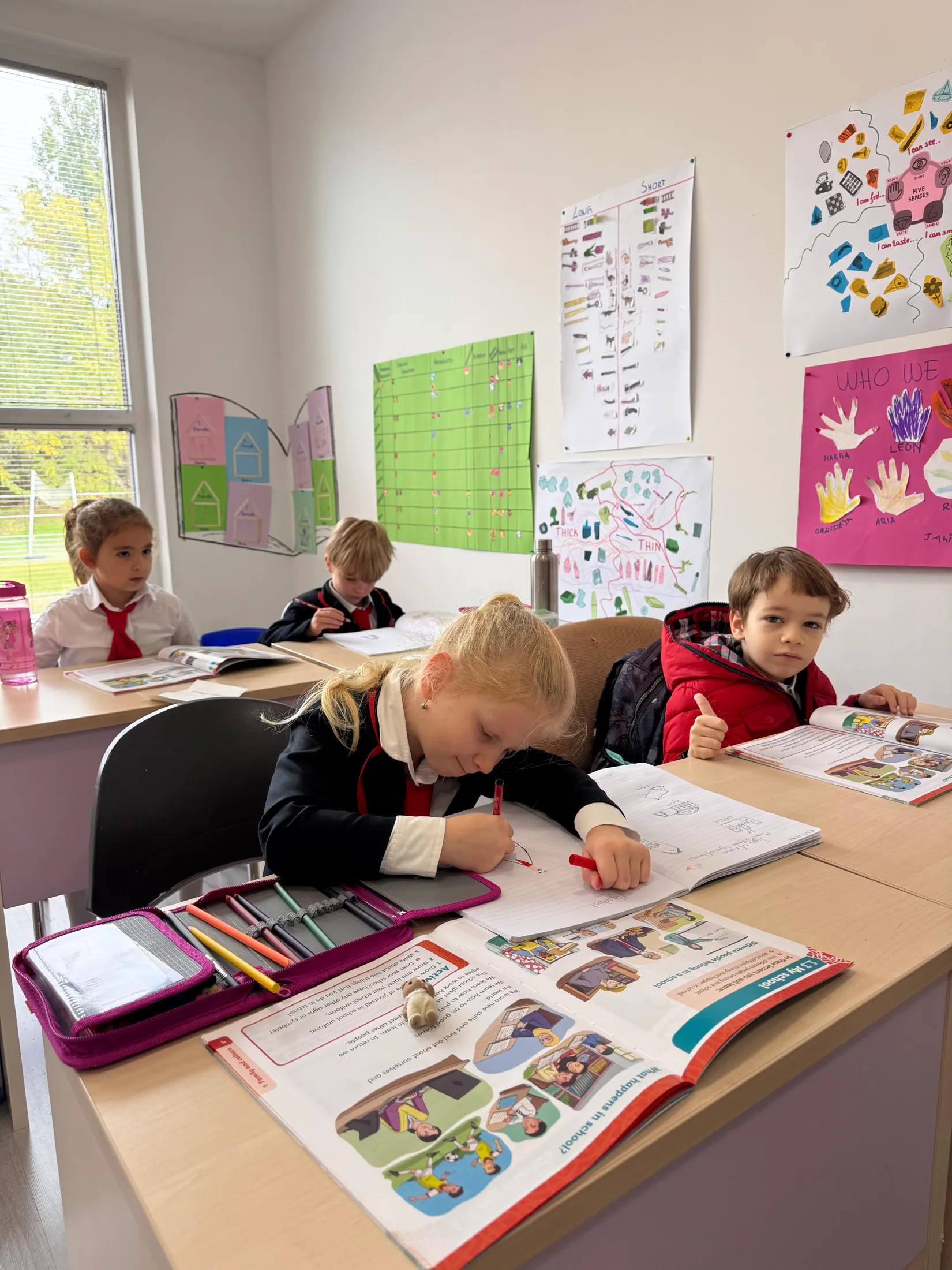
The first unit of the year is called “Who We Are”, and the classroom answers it in handprints: every hand traced, coloured, and signed, side by side on bright paper. Before first graders learn anything else, they learn that this room is theirs.
First they hang up their coats. Then they hang up their handprints.
Chapter Two · The Learning
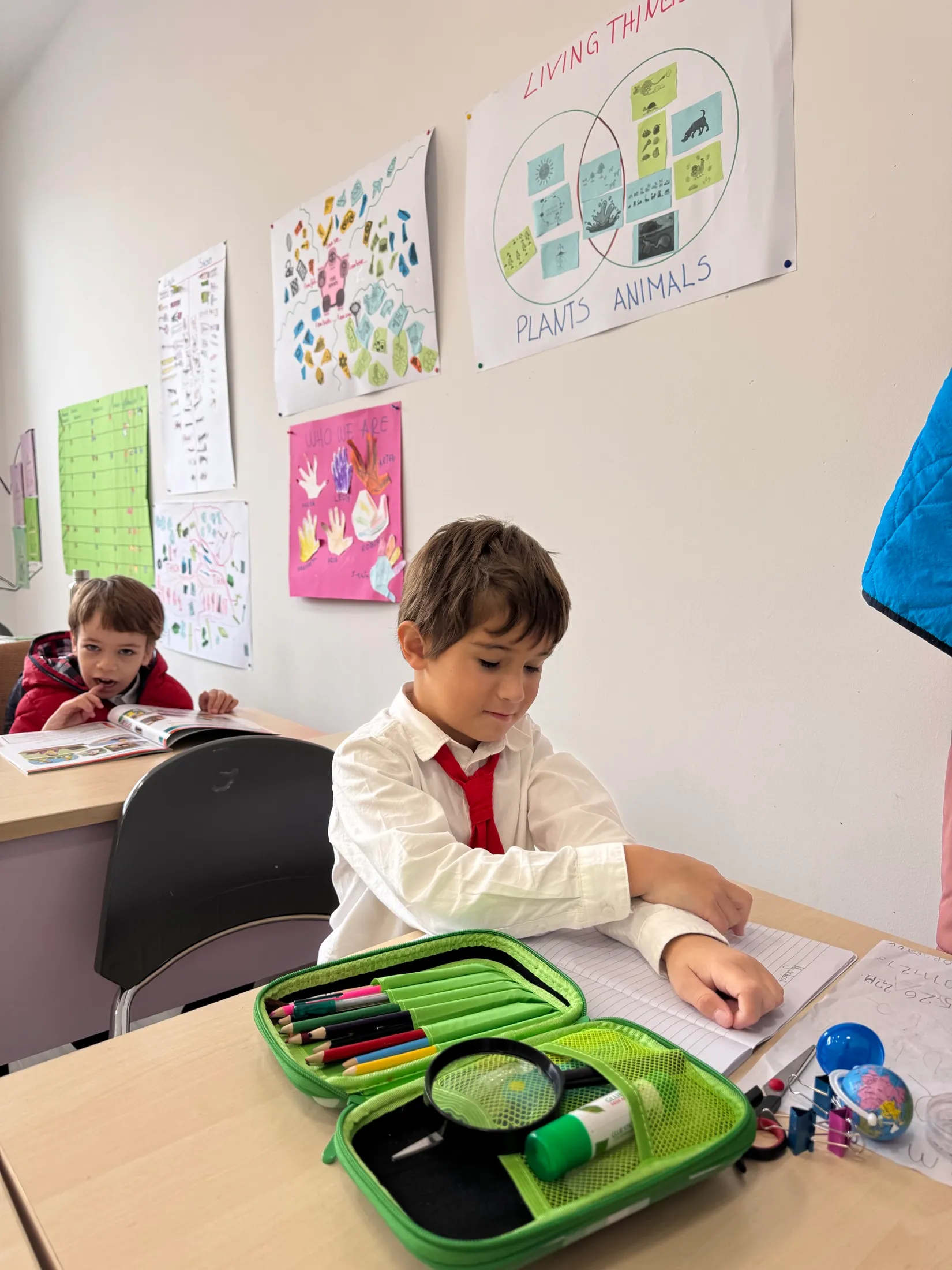
Grade 1 runs on the IB Primary Years Programme, which means children don’t just receive lessons — they investigate questions. Asked what makes something alive, the class grew a Venn diagram sorting plants from animals. Asked how we know the world, they mapped all five senses in cut-paper collage. Long and short, thick and thin — measured, sorted, argued over, and pinned to the wall.
Under the inquiry sits daily craft: reading and writing in two alphabets — English A to Z and Macedonian А to Ш — numbers that grow all year, and workbooks that fill up week by week. Curiosity is standard equipment here.
Straight from the classroom wall this year
Chapter Three · Giving Back
The third bee is the one parents notice last and treasure most. “I bestow” is the IB learner profile at work — caring, principled, open-minded — and in Grade 1 it looks wonderfully concrete: artwork made to be given away, a snack shared without being asked, a classroom tidied by the very people who untidied it.
By June, a room that began as ten strangers runs on its own small economy of kindness — turns taken, pencils lent, victories applauded.
Six-year-olds have a lot to give. School just makes room for it.
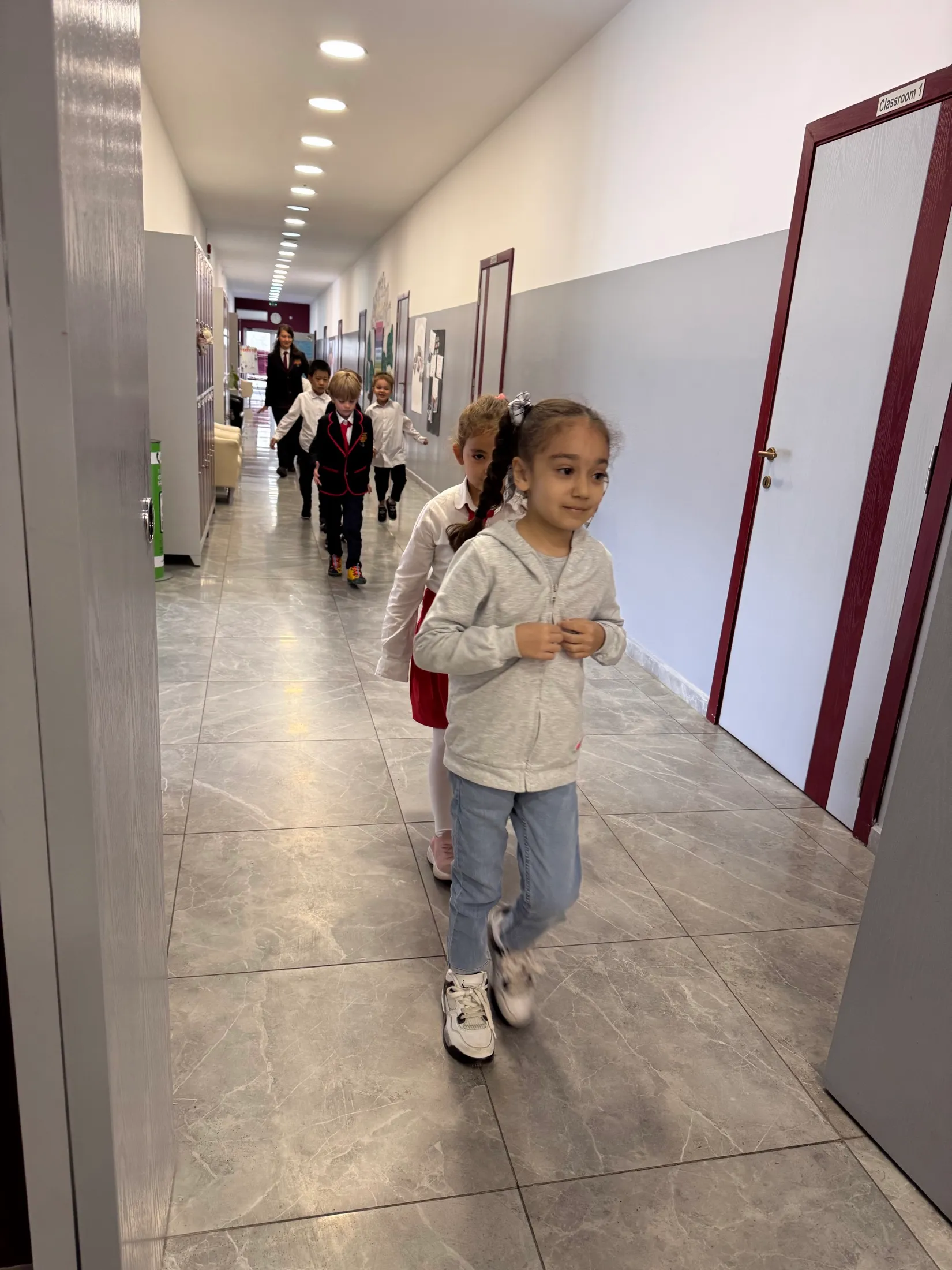
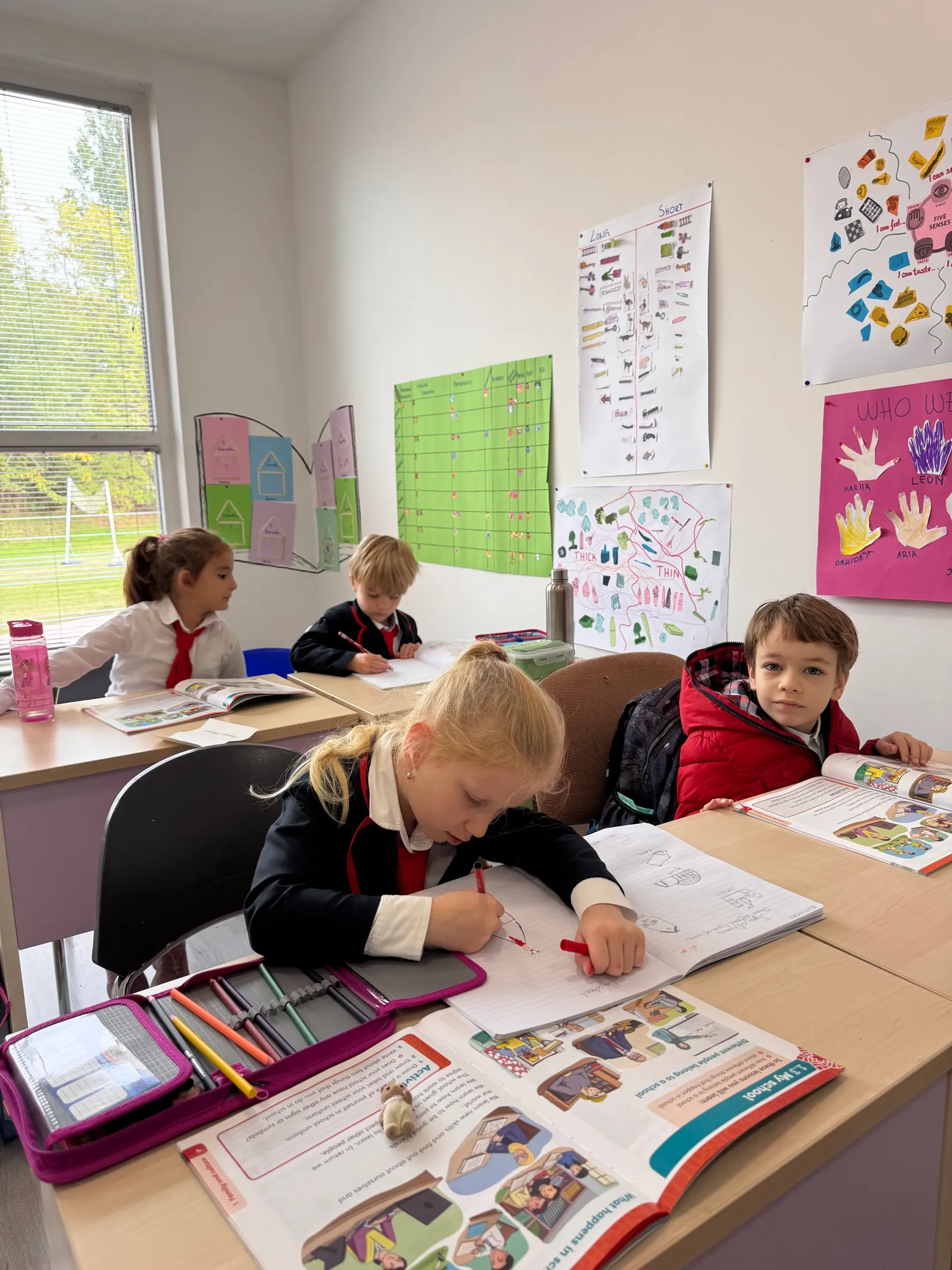
Straight from the camera roll
Tap any photo to look closer
Three short, silent clips — the classroom, the lawn, the library.
What a year makes
Not a syllabus — a short list of things we watched this year’s class learn to do.
Read and write in two alphabets — Latin and Cyrillic, side by side.
Measure, sort, and compare — long and short, thick and thin, and everything in between.
Ask a real question and investigate it — observe, sort the evidence, explain the answer.
Tell plants from animals — and say what every living thing needs.
Work in a team — take turns, share materials, disagree kindly.
Stand up in front of the class — and present something they made themselves.
Good to know
The practical questions parents ask on every tour — answered before you ask.
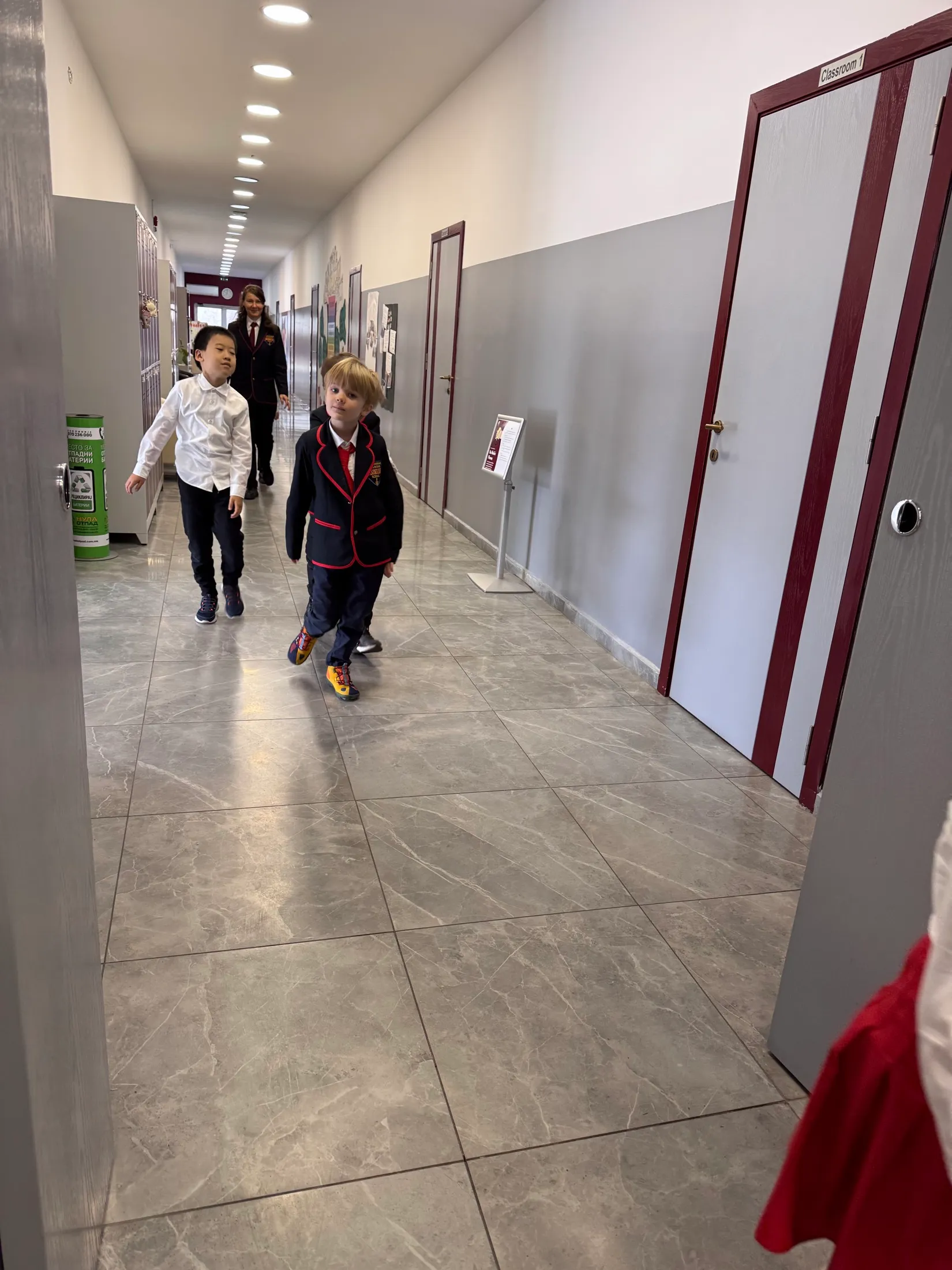
An average of ten students per class — enough for a big game at break, few enough that no one is ever a face in the crowd.
Optional supervised pick-up and drop-off at your own front door — so school mornings run on time.
Fresh meals and snacks prepared daily at school — lunchboxes are one thing you never have to think about.
Everyone wears the ISM uniform — it builds belonging and ends the what-to-wear debate before it starts.
Enrolling 2026/27
Book a visit while this year’s work is still on the walls — and picture your child’s handprint on the next “Who We Are” poster.